


South Williamsburg Rents Up 44%. Dumbo Rents at $8,513. Brooklyn's Neighborhood Gap Has Never Been Wider.
While Brooklyn's borough-wide median rent hit an all-time high of $4,350 in June, the neighborhood-level data tells a far more dramatic story — South Williamsburg up 44% to $6,569, Dumbo up 33% to $8,513, Carroll Gardens at $6,000. Meanwhile Bath Beach sits at $2,125. This post breaks down which Brooklyn neighborhoods are leading the surge, which are pulling back, and what the widening gap means for renters and building owners.
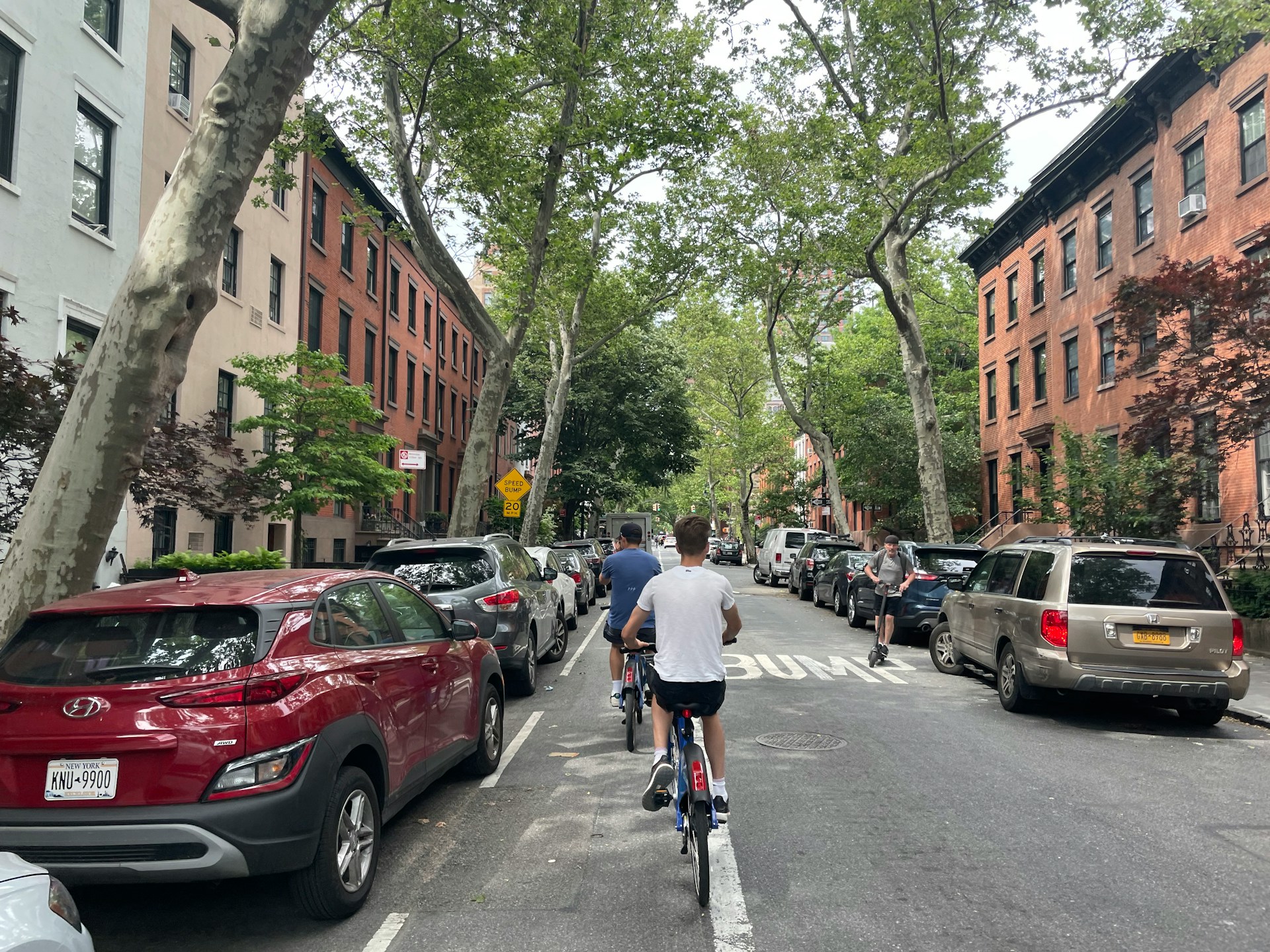
The borough-wide headline — Brooklyn's median rent hit an all-time high of $4,350 in June 2026 — is striking. But it understates what's actually happening in individual neighborhoods, where the divergence between the fastest-rising and most-affordable submarkets has reached a scale that fundamentally changes how tenants and building owners should be thinking about the market.
The neighborhood where Corcoran documented the largest jump in rental prices was South Williamsburg, where average rents spiked 44% from $4,571 in June 2025 to a record-setting $6,569 in June 2026. Not far behind was Dumbo, with a 33% increase in average rent from $6,406 in June 2025 to $8,513 in June 2026. Those are not modest appreciation numbers — they represent the kind of annual rent movement that forces real decisions for tenants and changes the investment calculus significantly for building owners in those neighborhoods.
At the other end of the spectrum, Bath Beach anchors the borough's accessible end at $2,125 per month, Dyker Heights at $2,495, and Borough Park at $2,497. The spread between Dumbo at $8,513 and Bath Beach at $2,125 — within the same borough, roughly 10 miles apart — is a gap of more than $6,000 per month. That's not a neighborhood preference differential. It's essentially two different housing markets that happen to share a zip code system.
What's Driving the Surge in South Williamsburg and Dumbo
South Williamsburg's 44% year-over-year jump is extraordinary even by New York standards, and it warrants some explanation. The neighborhood has been undergoing a transformation for several years — proximity to North Williamsburg's established restaurant and nightlife corridor, improving transit access, and a building stock that mixes new development with older industrial conversions has attracted a renter demographic willing to pay premium prices for the location. What the June data suggests is that this transformation reached a tipping point in 2025 and 2026, with demand accelerating faster than available inventory could absorb.
Dumbo's position at $8,513 is more consistent with its longer-term trajectory as one of Brooklyn's most expensive neighborhoods. Carroll Gardens leads Brooklyn's brownstone corridor on price at $6,000 per month, up 21.2% year-over-year, followed by Dumbo at $5,800 in the Howard Hanna neighborhood tracker — the difference in figures between reports reflecting methodological variations in what units and submarkets are included in each calculation. What both sources agree on is that the premium neighborhoods of northwest Brooklyn are commanding rents that would be expensive in Manhattan neighborhoods that aren't on the waterfront.
The forces driving these numbers are the same ones operating at the borough level, but concentrated. Both South Williamsburg and Dumbo have limited new supply relative to the demand they generate, high barriers to entry that prevent renters from easily substituting to comparable alternatives, and a tenant base — finance and tech professionals, creative industry workers, international renters — with above-average incomes and a demonstrated willingness to pay for location and building quality. When that combination of factors exists in a submarket with constrained inventory, rents move sharply upward and stay there.
The Outliers: Where Rents Are Actually Falling
Not every Brooklyn neighborhood is participating in the surge, and the outliers are as instructive as the leaders. The average rent in Prospect Heights dropped 15% from $5,312 in June 2025 to $4,537 in June 2026 — a significant pullback in a neighborhood that had been running at elevated levels and that sits adjacent to some of Brooklyn's highest-rent corridors. A decline of that magnitude in a single year typically reflects one of a few dynamics: new supply entering the submarket and creating competition that forces existing landlords to price more competitively, a shift in tenant preferences away from the neighborhood, or a correction from a previous period of outsized appreciation that pushed rents beyond what the local tenant base could sustain.
Dyker Heights also posted a notable year-over-year pullback, though the Howard Hanna report flags the small sample size of just 15 listings as a caveat for that reading. Small sample sizes can produce volatile statistics, and a single large new building entering the market in a neighborhood with limited rental stock can move the average significantly in either direction. For building owners in these neighborhoods, the directional signal is still worth monitoring even where the sample is thin.
What the Gap Means for Renters Making Decisions Now
The practical implication of Brooklyn's widening neighborhood rent gap is that geography is doing more work than it has in years in determining what a renter pays. A tenant who anchors their search to South Williamsburg, Dumbo, or Carroll Gardens is operating in a submarket where $6,000 to $8,500 is the current market rate for quality two-bedrooms, and where the negotiating room is minimal. A tenant who can consider Bushwick, Bed-Stuy, or the South Brooklyn neighborhoods is operating in a genuinely different market — not a compromised version of the same one.
Williamsburg remains Brooklyn's deepest rental pool at 1,555 active listings, followed by Bushwick at 1,499 and Bedford-Stuyvesant at 1,345. Those three neighborhoods together account for a significant share of Brooklyn's total rental inventory and offer the most selection of any submarkets in the borough. For renters who need to be in Brooklyn but have flexibility on exactly where, those are the neighborhoods where the widest range of options and the most negotiating room currently exists.
The timing of the search also matters. Summer is when demand peaks and landlord negotiating power is highest. The window between mid-September and November typically brings more units to market as landlords who didn't fill their vacancies in summer become more willing to negotiate on price or concessions. For renters who can wait, that window often produces better outcomes than competing in peak summer inventory.
What It Means for Building Owners
For owners in the neighborhoods posting the largest year-over-year gains — South Williamsburg, Dumbo, Carroll Gardens, Cobble Hill — the June data validates a strong market position heading into fall lease renewals and new tenancy negotiations. Units turning over in these neighborhoods right now are entering a market where comparable rents have moved significantly in 12 months. Pricing to June 2025 comparables would mean leaving substantial money on the table.
For owners in neighborhoods where rents have pulled back — Prospect Heights in particular — the situation calls for a different approach. Understanding whether the decline reflects temporary oversupply, a pricing correction from unsustainably elevated levels, or a longer-term shift in tenant demand requires looking at vacancy rates and time-on-market data at the building level, not just the neighborhood median. A building with strong retention and low vacancy in a neighborhood where the average has declined may be performing well despite the headline; a building with rising vacancy in the same neighborhood needs a pricing and positioning reassessment.
At Dover Property Group, we track rental data at the neighborhood and building level across all five boroughs because borough-wide medians rarely tell you what you need to know to make a specific decision about a specific property. If you want to understand how your building's current rents compare to the June 2026 data for your neighborhood — and what that means for your next renewal cycle — our team is glad to walk through it with you.
Sources: amNewYork — Rents in Brooklyn and Manhattan Keep Soaring to New Records · Howard Hanna NYC — Brooklyn Real Estate Market Report July 2026 · StreetEasy — 5 NYC Housing Market Predictions for 2026
About the Author
Dover Property Group is a New York City property management firm working with building owners and tenants across all five boroughs. Our team tracks market conditions, compliance requirements, and neighborhood-level trends to help owners protect their assets and tenants navigate one of the most complex rental markets in the country.